
Diabetes: Causes, Prevention and Control
Diabetes: Causes, Prevention, and Management
Diabetes is one of the biggest health challenges facing the world today. According to the World Health Organization (WHO), hundreds of millions of people worldwide live with diabetes, and the number continues to rise rapidly each year. The good news is that type 2 diabetes is largely preventable through informed lifestyle choices — and even after diagnosis, it can be effectively managed.
What is diabetes?
Diabetes is a chronic disease that occurs either when the pancreas does not produce enough insulin or when the body cannot effectively use the insulin it produces. Insulin is a hormone that regulates blood glucose. This insulin deficiency or dysfunction causes blood glucose levels to rise, a condition known as hyperglycemia — which, over time, leads to serious damage to many of the body's systems, especially the nerves and blood vessels.
Types of diabetes
Type 1 diabetes — In this type, the body does not produce enough insulin. Its exact cause is unknown, and with current medical knowledge, it is not preventable. People with type 1 diabetes require daily insulin administration. Symptoms include excessive urination, constant thirst, persistent hunger, weight loss, vision changes, and fatigue — and these symptoms can appear suddenly.
Type 2 diabetes — This is the most common form and is often preventable. It occurs when the body cannot effectively use the insulin it produces. Being overweight, insufficient physical activity, and genetic factors all increase the risk. Because symptoms can be mild, diagnosis is sometimes delayed for years, by which time complications may have already begun to develop.
Gestational diabetes — This refers to high blood glucose that is first identified during pregnancy.
Why does diabetes happen — risk factors
For type 2 diabetes, the main risk factors include:
Being overweight or obese — research identifies this as the single most significant modifiable risk factor
Physical inactivity — insufficient exercise or movement
Unhealthy diet — excessive sugar and saturated fat intake
Genetic predisposition (family history)
Increasing age — risk rises with age
Tobacco use — smoking increases the risk of both diabetes and cardiovascular disease
How to prevent diabetes
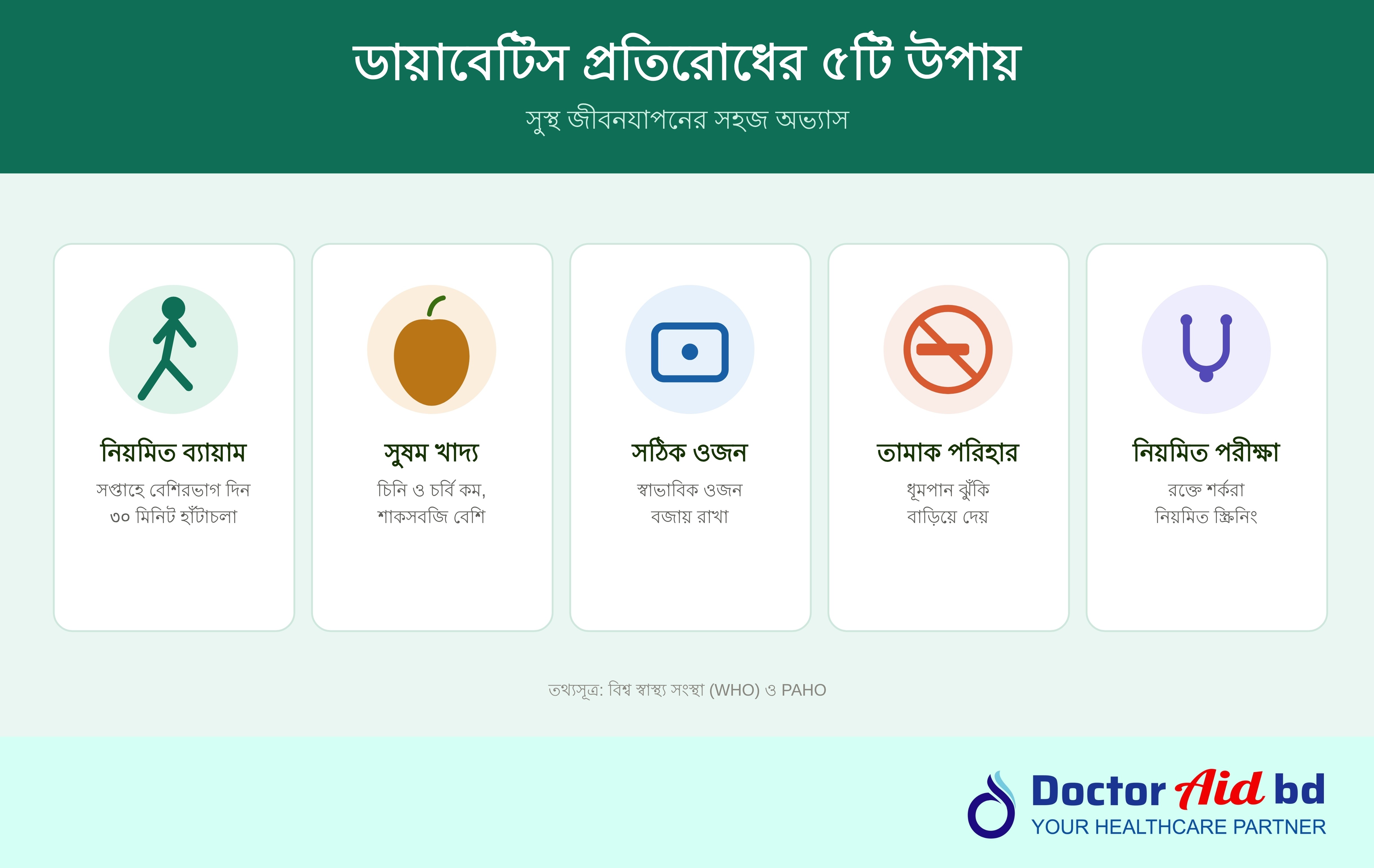
According to recommendations from the WHO and the Pan American Health Organization (PAHO), a few simple lifestyle changes have been proven effective in preventing or delaying the onset of type 2 diabetes:
Stay physically active — aim for at least 30 minutes of moderate-intensity activity (such as walking) on most days of the week. More activity may be needed for weight control.
Eat a healthy diet — limit sugar and saturated fats.
Maintain a healthy body weight.
Avoid tobacco use — quitting smoking reduces the risk of both diabetes and cardiovascular disease.
Get regular health checkups — relatively inexpensive blood sugar testing can detect diabetes early, helping to prevent complications.
Managing diabetes after diagnosis
Being diagnosed with diabetes is not a cause for despair — with proper management, its complications can be avoided or significantly delayed:
Dietary management — following a balanced diet as recommended by a healthcare provider
Regular physical activity
Medication or insulin, when needed — as prescribed by a doctor
Regular screening and follow-up — routine checks of blood sugar levels, eyes, kidneys, and feet to catch complications early
If left untreated or poorly controlled, diabetes can lead to serious complications including blindness, kidney failure, heart attack, stroke, and lower-limb amputation. This is why staying in regular contact with a healthcare provider after a diabetes diagnosis is essential.
Final thoughts
Type 2 diabetes is, in large part, a preventable disease. A balanced diet, regular exercise, maintaining a healthy weight, and avoiding tobacco — these few simple habits can significantly reduce your risk. And if you have already been diagnosed with diabetes, following your doctor's guidance and making the necessary lifestyle changes are the key to staying healthy.
This article is intended for general informational purposes only and is not a substitute for professional medical advice. Please consult a qualified healthcare provider for decisions about your personal health or diabetes management.